
Well, the holidays are just around the corner, and it’s that time of year: we’re all walking around with shopping lists and gift ideas at the forefront of our minds! If you have a friend or loved one with chronic illness or disability, you may be looking for something extra special and thoughtful this year. Here are just a few ideas, from one “spoonie” to another!
Brain Fog Help

Brain fog and memory issues are a common problem for many of us living with chronic illness. We learn all kinds of tips and tricks to help us cope, and one of the big ones is keeping notes. If the person on your gift list is anything like me, some of their best (or most pressing) thoughts will likely come at the most inconvenient times, like while showering. Well, there’s a solution for that! Did you know there are several different kinds of shower notepads out there, including this one? These waterproof pads allow the person to jot down their thoughts while they’re fresh on their mind!

Another great tool is a planner. There are dozens of options out there, including some that are specific to things like ADHD, that help a person stay organized. The other benefit of a planner is that it allows you to track the things you have completed (giving you a sense of accomplishment), and the things you want to complete (to help you stay organized). For those who live with complex symptoms, multiple doctor appointments, or multiple medications, planners are also invaluable tools to help keep everything straight. Another great gift idea is a journal, where your loved one can write their experiences, symptoms, doodle for relaxation, etc.
Chronic Fatigue and Weakness

Hydration is of utmost importance, especially with chronic illness, but gripping a bottle (or any kind of mug or cup) can be really difficult if your loved one suffers from chronic fatigue, weakness, or joint pain. A bottle like this that allows them to pass their hand through and grip with the whole hand can sometimes make things easier. If you’d prefer to find a regular bottle, look for something lightweight that’s easy to grip, and that has a lid that can be removed without too much difficulty.

Rest is an essential component of life with chronic illness, but not always easy to accomplish with daytime ambient noise. One essential tool I use daily to manage my health is a white noise machine. They block out disruptive noise while providing a steady, calming sound that can be soothing and sleep-inducing. Bonus points if you can find a portable kind that can be taken on the go! Holiday gatherings can be especially exhausting, and I often have to find a quiet corner for a little nap with my white noise machine.
Support and Encouragement
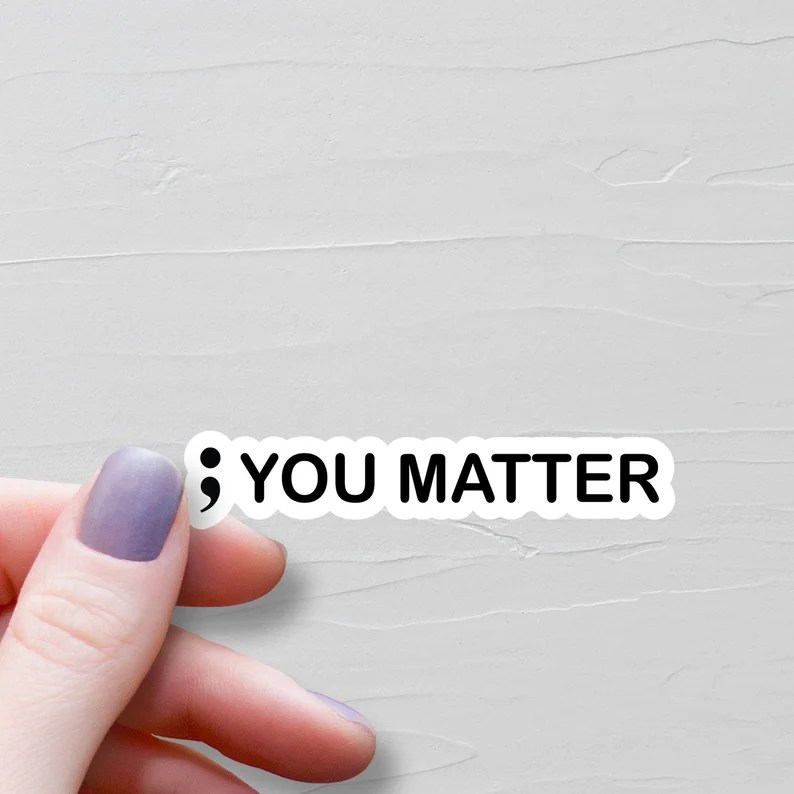
It can be a long, long road coping with mental illness, chronic illness, or disability. It may not seem like much, but little encouragement goes a long way. Things like “You Matter” stickers, or other small ways of celebrating the worth and value of your loved one, while acknowledging their struggles, may help them to feel that they’ve got support for the journey. Of course, please be sensitive to what your loved one is ready to receive!

We spoonies all have flare days, so why not own it and prepare for it? Something like this soft sweatshirt both acknowledges the reality of life with chronic illness, while providing a fun and practical way of coping. I can just imagine spending the day curled up in something like this, feeling cozy and supported…

Flowers have a way of brightening a space and cheering us up. Why not consider a monthly gift of flowers? There are subscription services, such as Bouqs, that will ship to your loved one’s home each month. Or you could swing by a garden or grocery store and deliver a little jar of flowers each month. It doesn’t have to elaborate or expensive–just something to let them know you’re thinking of them and to brighten their day.

For that matter, why not commit to sending a letter or card each month? It’s so rare, these days, to get real mail. And all the more meaningful when it includes a few words of encouragement. You don’t have to say anything earth-shattering–in fact, you don’t have to say much of anything at all! Just let them know you’re thinking about them. Share something you love about them–not about who they used to be, but about who they are now, even with their illness. Tell them about something that reminded them of you. Just pop into their mailbox to say hello and brighten their day.
What do you think? If you’re someone who lives with illness or disability, what are some things you’d love to receive this year?
 Livable by Design