

It’s that season, at last! Everywhere I look I see people outside enjoying the weather, gathering for cookouts, and picnicking. And why not? Those of us who live in my neck of the woods have waited a long time for the warm weather to arrive!
Picnics and outdoor gatherings involving food can be especially difficult, though, for two groups of us: those who live with food intolerances and allergies, and those who have mobility and accessibility challenges. So, in the spirit of summer, here are just a few things that might make your picnicking easier this year!
Picnic Tables and Gear
When it comes to picnics, there can be a lot of gear to bring: plates, utensils, drinkware–never mind the food! If you have difficulty carrying things or are a wheelchair user, it might be especially challenging to get all the stuff to the picnic site. Rather than the traditional picnic basket or cooler, it might be worth considering a picnic bag!
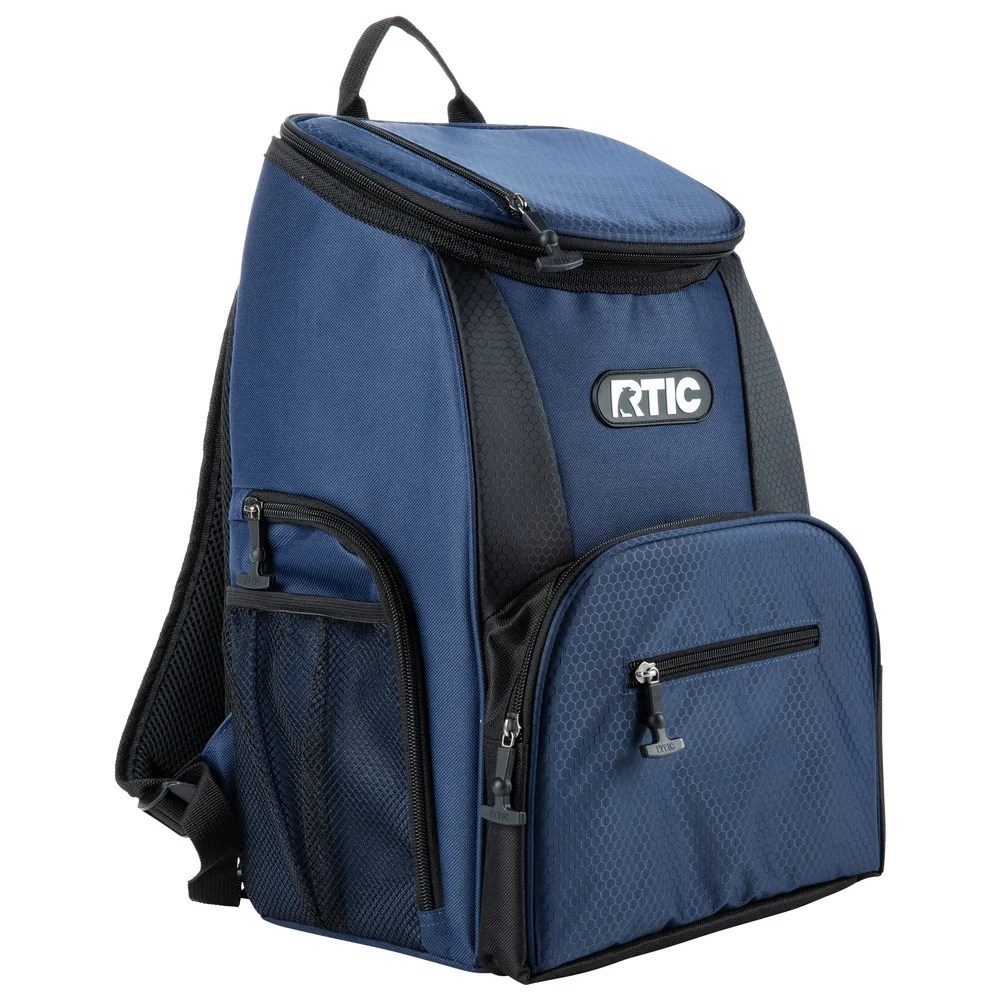
A navy blue backpack cooler is shown with rounded top and navy blue straps. Multiple zippered pockets and pouches are found on all sides of the bag.
Cooler backpacks come in all shapes and sizes to meet your needs. Typically, they have several pockets to allow you to store utensils, plates, and other necessities, plus cooler space for food. Some come with attached picnic blankets. The beauty of a cooler backpack is that it can be worn hands-free, and distributes the weight of what you’re carrying evenly over your back. It can also be hooked over the handles of a wheelchair or other mobility device to make it easy to carry everything you need for a picnic.
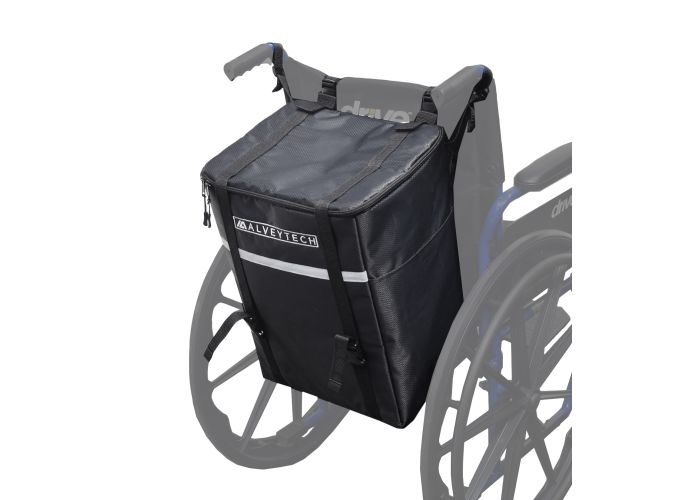
A large black cooler bag is shown hooked over handles of a greyed-out wheelchair silhouette.
If you are a wheelchair user, you may want to consider a bag made specifically for use with a wheelchair, since the straps will hold it in place more easily and the zipper placement will be optimized for you to reach from your chair. There are many options on the market, but these bags also allow you to carry all of the picnic essentials within easy reach. An insulated bag also means you can take time for a leisurely stroll or hike along an accessible trail before enjoying your meal, and your food will keep just fine!
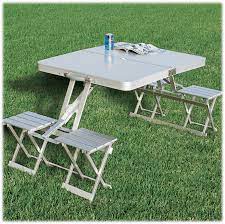
A folding aluminum picnic table is shown on a grassy area. Four fold-out stools are on two sides of the table, with a large open area under the other two sides. A can of soft drink and an open magazine sit on the table top.
More and more parks and recreation areas are installing accessible picnic tables. Still, sometimes they just aren’t available when you need them. Or sometimes, you might want to picnic in an area that doesn’t have tables at all. One consideration is to bring your own folding table. These are typically lightweight and easy to carry. While many come with attached seating, there are folding tables available with no seats, and that are easy to roll up to in a wheelchair. With careful shopping, though, you might even find a table that has seats and room for wheelchair access. Although it would be a bit of a tight squeeze, this table could have just enough clearance for a wheelchair user and a few friends–to save having to haul chairs in addition to all the other necessary gear.
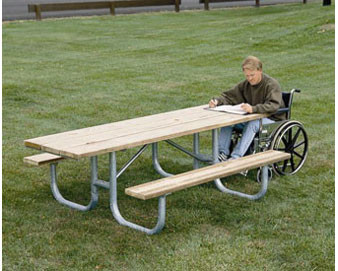
A picnic table with metal frame and wooden top and bench. The ends of the picnic table have a long overhang that allow space for a wheelchair user. A Caucasian man in wheelchair sits at one end reading a book.
For a more permanent picnic option, you might consider adding an accessible picnic table to your backyard. Even if you are not a wheelchair user yourself, creating an accessible space to host can make any guest feel more welcome at your table. There are dozens of accessible picnic table designs on the market, and any variety of price points. A simple solution is a picnic table with long overhang on one or both ends of the table that create space for a wheelchair user to sit. As an added advantage, this also increases the total area of the picnic table, so you have even more room for amazing food and friends!
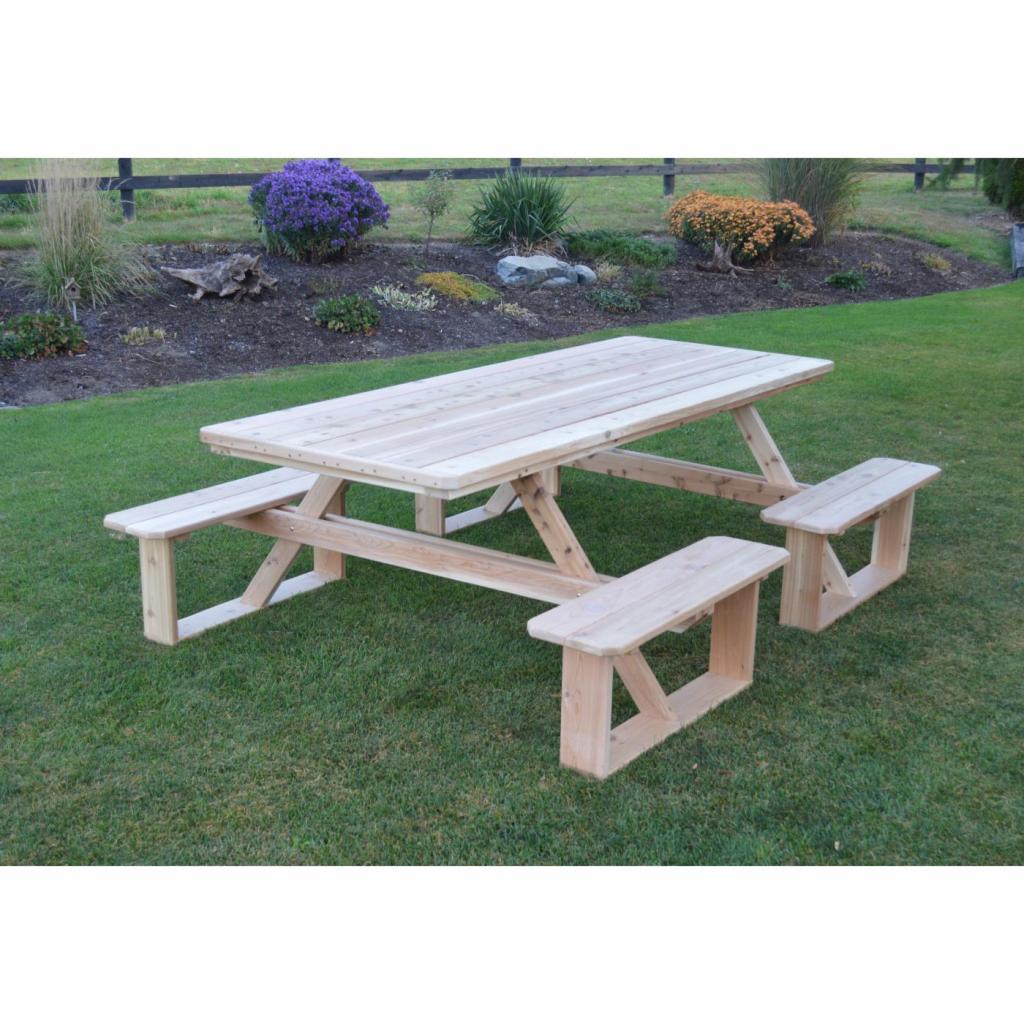
A long wooden picnic table with divided wooden benches on each side sits on a grassy area.
Even for non-wheelchair users, it can be challenging to take a seat at a traditional picnic table. One way to make seating easier is with a divided bench, such as this one. The space creates an easier approach to the bench without having to swing the legs over the whole length of the bench and take a seat. A table like this one with an extended end could be welcoming for both wheelchair-users and those with pain or mobility issues who don’t necessarily rely on a chair.
Celiac-Safe Picnic
Picnics, like all other gatherings involving food, can be very tricky for those of us living with celiac disease. If someone else is providing the meal, you may find yourself having to pack our own food. But if you are in the position to bring food (or contribute to the meal), there are so many good picnic food options to consider!
I owe a debt of gratitude to my sister-in-law for this discovery, but after four years with celiac disease, I have finally found a gluten free bread that is both delicious and palatable without needing to be toasted: Schar artisan multigrain bread!
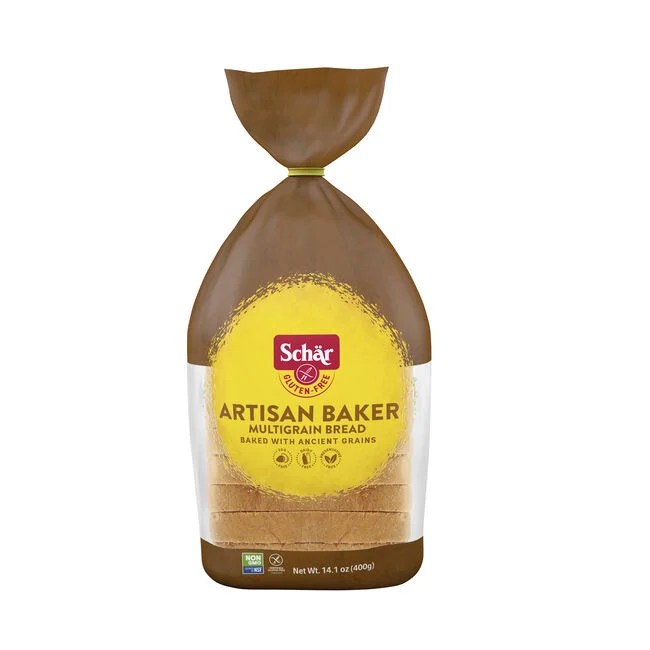
A loaf of Schar artisan baker multigrain bread is shown in its packaging, with brown top and large yellow circle containing the Schar logo and name of the bread.
Widely available, this bread is soft and delicious and reminds me just a little bit of the rye and pumpernickel breads I used to love. If you’ve been on a gluten free diet for a while, you know that texture is usually the biggest problem with gluten free products–especially bread. To me, this bread tastes and feels almost like the real thing. When we took our trip to Austin, TX, this was the bread I packed to make meals along the way. It pairs great with just about any kind of lunch meat or cheese, and even keeps well opened for several days. If sandwiches are a necessary part of your picnic, I definitely recommend this bread (or many others offered by this brand).
There are many other traditional picnic-type foods to consider, and a few that are extra-special. You can always make a potato or pasta salad by subbing out gluten free ingredients in your favorite recipe. We always enjoy a spinach and strawberry salad, especially at the height of berry season! For a decadent but simple dessert, my crew also always loves gluten free wine cake.
If you’re looking for something truly unique, though, you might want to consider one of my favorite recipes. It’s a little more time-consuming than some of the recipes I post, but I promise it’s worth it!
Gluten Free Sweet Potato Empanadas
I don’t recall where I gleaned this recipe years ago, although I believe it was pieced together with this recipe for gluten free empanadas as the foundation (as an aside, if you live with celiac disease, you need to check out this blog. Many of my favorite recipes come from Gluten Free on a Shoestring).
Recipe
Makes 4 empanadas
Pastry:
1 cup gluten free flour
1 egg, lightly beaten (plus 1 for wash, if desired)
2 Tbsp olive oil, plus 2 Tbsp for frying
1/2 Tbsp Balsamic vinegar
2 1/2 Tbsp water
1 Tbsp sugar
1 tsp baking powder
1/4 tsp salt
Filling:
1 lb ground beef
1 small pepper, finely diced
1 small sweet potato, finely diced
1/2 cup chopped onion
1 tsp cumin
1 tsp chili powder
Combine the pastry ingredients until well-mixed. Make into 4 even balls, and flatten on a greased sheet. Refrigerate while cooking the filler.
Preheat the oven to 375 degrees F. In a frying pan, sautee onions in 2 Tbsp of olive oil until soft. Add sweet potatoes (and garlic, if desired, up to 1 tsp). Stir until beginning to soften. Add pepper and spices, then beef. Continue stirring until thoroughly cooked and combined.
Fill 1/2 of each empanada shell with filling, folding the other half over to form a half-circle. Crimp the edges with fingers, then roll them. If desired, you can press fork tines into the rolled crust along the edge. Wash lightly with a beaten egg.
Bake for 15 minutes, or until golden brown.
Notes
Although the recipe is intended for empanadas, this filling would also pair well with white rice or another grain, and could be served warm or cold.
If you are unable to eat eggs, simply skip the egg wash. For a similar golden coating, you could also wash the empanadas with milk of your choice or aquafaba.
The recipe calls for beef, but these could also be made vegan or vegetarian by eliminating the beef or substituting for lentils or another protein. If you prefer not to use beef but would still like meat, these could also be made with ground turkey.
If you like your food a little spicier, feel free to increase the chili powder. You could also experiment with other spices to create a warmer flavor profile, such as cardamom, cinnamon, curry, or turmeric.
These empanadas can be made ahead and eaten either warm or cold. They would also freeze well, so you can work ahead on a good day and have a delicious picnic ready, even on a flare day.
Whatever form your picnic takes, and whatever foods are spread out before you, I wish you a little happiness in the sun and a delightful, inclusive picnic!
 Livable by Design
One response to “Accessible Picnics”
[…] doesn’t love a picnic? But sometimes the effort of packing everything up, lugging it to a park, setting up, etc., is just […]
LikeLike